Your Fence: The First Line of Defense — Or the First Thing to Burn
California experienced over 7,000 wildfires in 2025, burning more than 1 million acres and destroying thousands of structures. For homeowners in wildfire-prone areas — which includes much of Southern California, the Sierra foothills, and large portions of Northern California — your fence material isn't just an aesthetic choice. It's a safety decision that can determine whether your home survives a wildfire.
How Fences Contribute to Wildfire Damage
During wildfires, flying embers can travel more than a mile ahead of the fire front. These embers land on combustible materials and ignite spot fires. A wood fence acts as a wick — once ignited, it carries fire directly along your property line and to your home's structure. Fire investigators have documented countless cases where wood fences served as the pathway that brought fire from open land to residential structures.
The California Department of Forestry and Fire Protection (CAL FIRE) specifically identifies combustible fencing as a vulnerability in their defensible space guidelines.
CAL FIRE Defensible Space Requirements
California law (PRC 4291) requires property owners in State Responsibility Areas to maintain defensible space around structures. While the law doesn't explicitly ban wood fences, CAL FIRE's guidelines recommend:
- Zone 0 (0-5 feet from structure): No combustible materials, including fencing
- Zone 1 (5-30 feet): Remove all dead vegetation, maintain lean/clean/green landscaping
- Zone 2 (30-100 feet): Reduce fuel loads, create spacing between vegetation
A wood fence attached to your home (as most are) violates Zone 0 requirements. Insurance companies are increasingly requiring non-combustible fencing for policy renewal in high-risk areas.
Fire Ratings by Fence Material
| Material | Fire Rating | Behavior in Fire | Risk Level |
|---|---|---|---|
| Precast Concrete | 4-hour | Non-combustible, acts as firebreak | Lowest |
| CMU Block Wall | 4-hour | Non-combustible | Low |
| Steel/Wrought Iron | Non-combustible | Conducts heat, doesn't ignite | Low |
| Vinyl (PVC) | None | Melts, produces toxic HCl gas | Medium-High |
| Composite | Varies | May ignite, produces toxic smoke | Medium |
| Wood (treated) | None | Ignites from embers, carries fire | Highest |
| Wood (untreated) | None | Ignites rapidly, intense flame | Highest |
Why Precast Concrete Is the Top Choice for Wildfire Zones
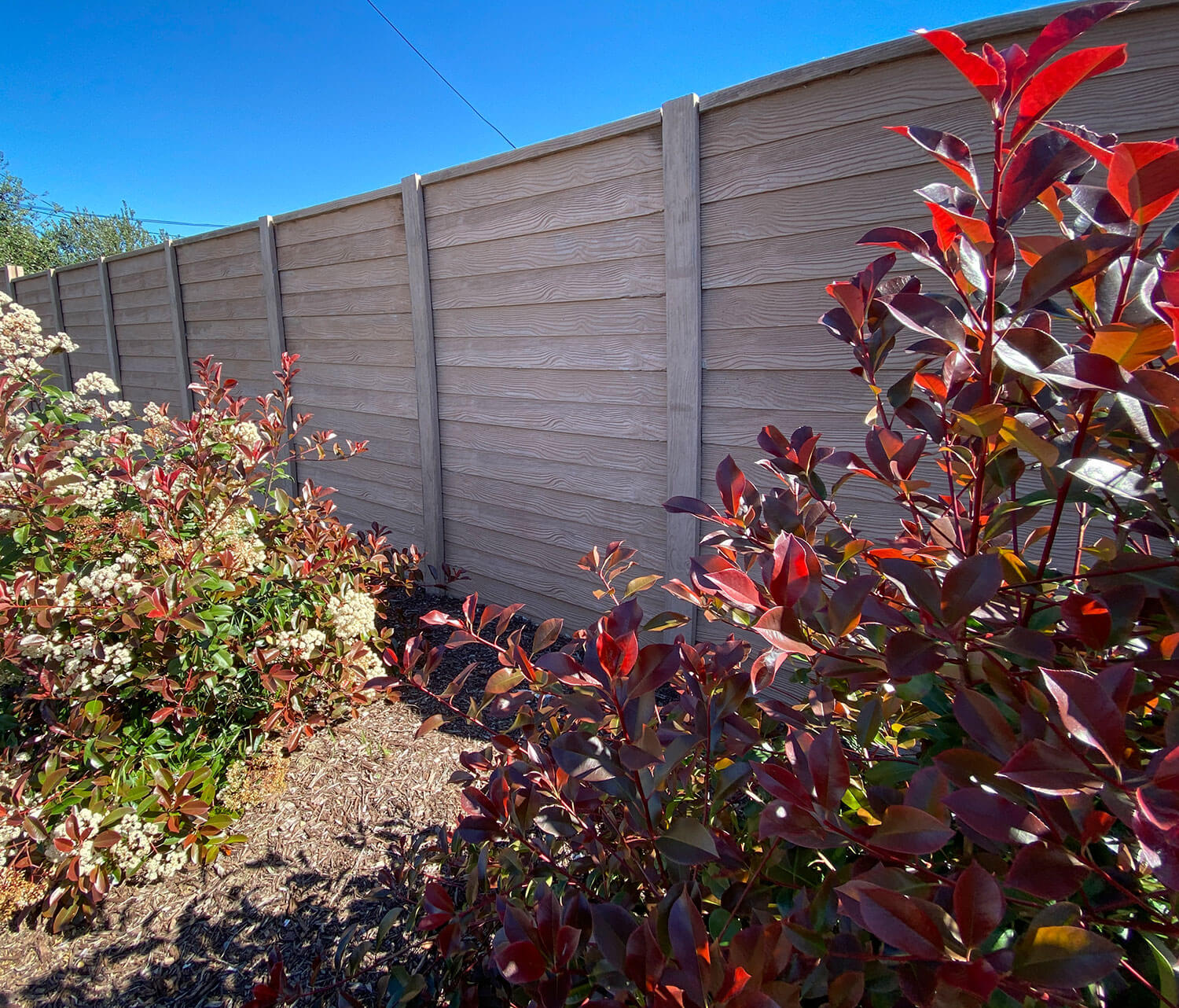
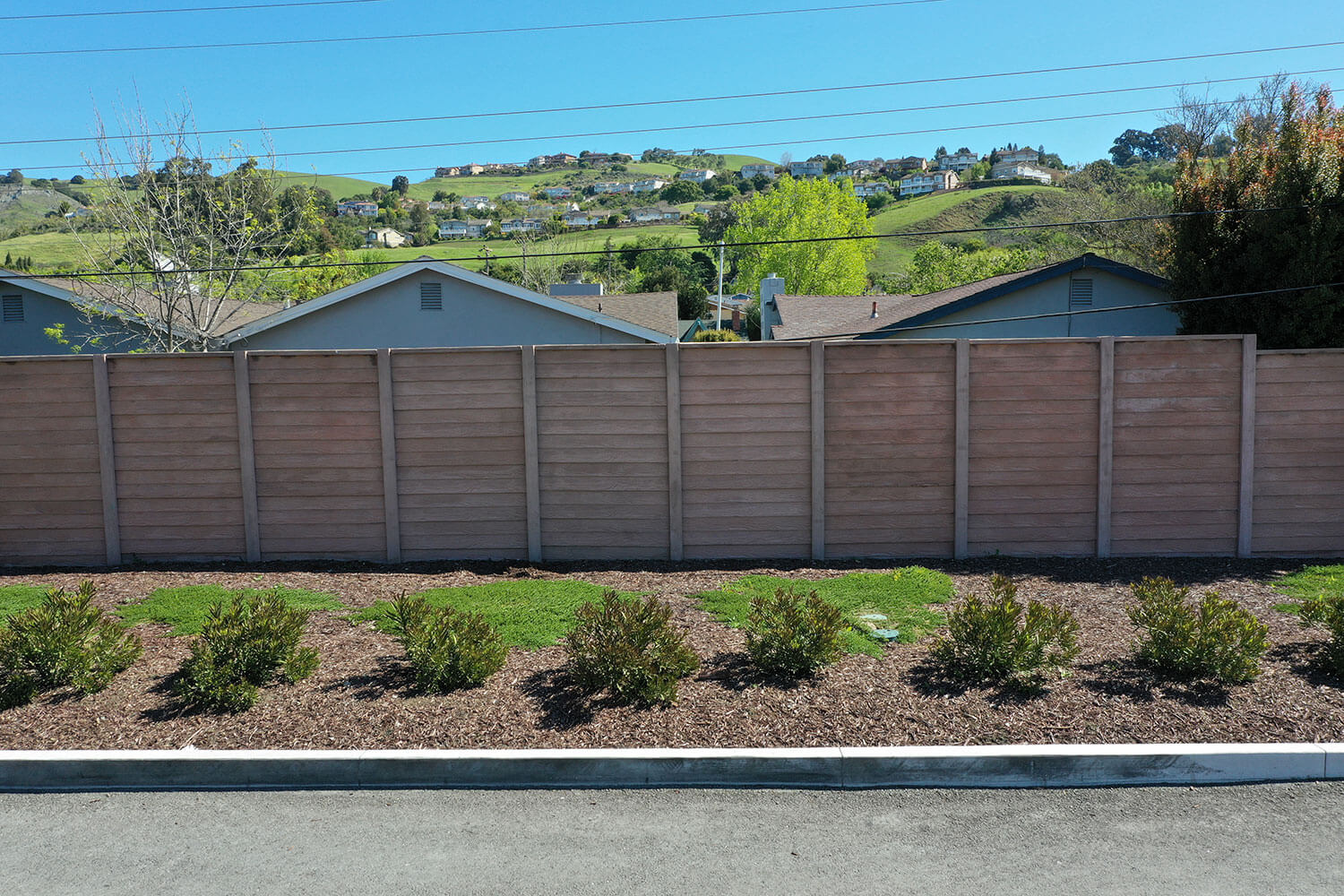
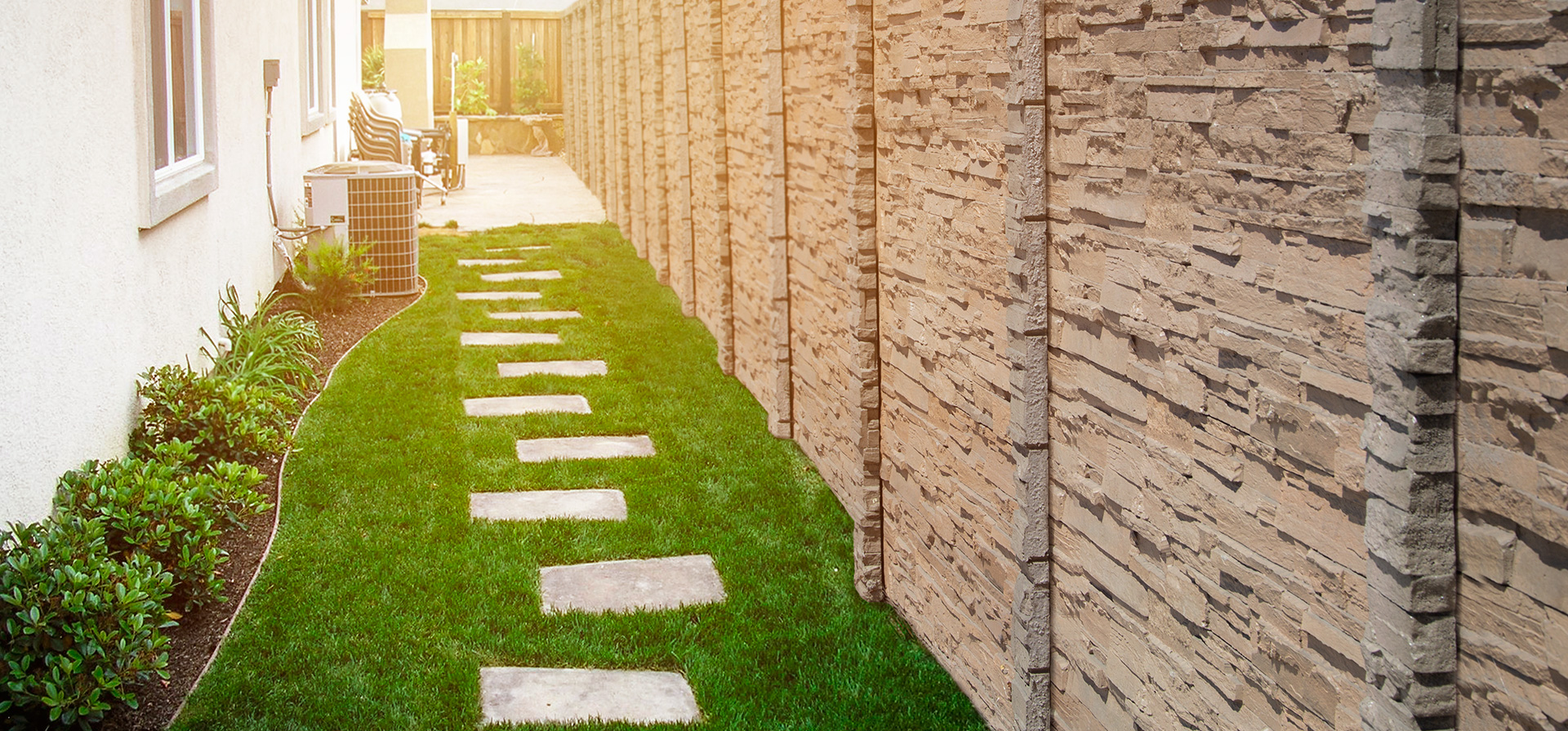
Precast concrete fencing is the gold standard for wildfire-zone properties because it combines fire resistance with practical benefits:
- 4-hour fire rating: Won't ignite, spread flame, or produce toxic smoke
- Acts as a firebreak: A solid concrete wall blocks radiant heat and flying embers from reaching your home
- No ember accumulation: Smooth/textured surfaces don't trap embers like wood grain or vinyl joints
- Structural integrity maintained: After a fire passes, the fence is still standing and functional
- Insurance compliance: Meets all insurance requirements for non-combustible fencing
- Zero maintenance in fire season: No dry vegetation accumulation, no need to clear debris from fence line
Insurance Implications
California's insurance crisis is directly tied to wildfire risk. Major insurers (State Farm, Allstate, Farmers) have stopped writing new policies in high-risk areas. For homeowners who can get coverage, premiums have increased 30-100% in recent years.
Non-combustible fencing is one of the mitigation measures that can help maintain or reduce insurance premiums. Some insurers offer specific discounts for homes with non-combustible perimeter fencing. At minimum, it demonstrates compliance with defensible space requirements — a factor in claims approval.
Real-World Performance
During the 2025 Palisades Fire in Los Angeles, properties with concrete perimeter walls showed significantly higher survival rates than those with wood fencing. The concrete walls blocked radiant heat and prevented ember intrusion into the immediate property zone. Multiple homeowners reported that their concrete fence was the only structure still standing after the fire passed.
We've installed precast concrete fences in some of California's highest-risk areas: Malibu, the Oakland Hills, Paradise (rebuilt after the Camp Fire), and throughout the Wildland-Urban Interface zones of San Bernardino and Riverside counties.
What About Fire-Retardant Treated Wood?
Fire-retardant treated (FRT) wood is sometimes proposed as a compromise. While FRT wood is harder to ignite than untreated wood, it is NOT non-combustible. Under sustained exposure to radiant heat or direct flame, FRT wood will eventually ignite. It also requires re-treatment every 5-7 years to maintain its fire-retardant properties — a maintenance step that's often neglected.
For genuine fire protection, non-combustible materials (concrete, block, steel) are the only reliable option.
Cost of Fire-Resistant Fencing vs. Fire Damage
A typical 100-linear-foot residential precast concrete wall should generally be budgeted around $17,500-$22,500. The average cost of wildfire damage to a California home exceeds $250,000 — and that's if the home is repairable. Total loss claims average $500,000-$1,000,000+.
Even if a concrete fence reduces your fire risk by just 10-20%, the ROI is extraordinary. When you factor in insurance savings, eliminated maintenance costs, and property value increase, the investment case is overwhelming.
Steps to Protect Your Property
- Replace combustible fencing within 30 feet of your home with precast concrete or steel
- Eliminate fence-to-structure connections — if your fence attaches to your home, fire travels directly to the structure
- Clear vegetation from fence lines — even non-combustible fences can have vegetation growing against them
- Consider your gate material — a wood gate in a concrete fence is still a vulnerability
- Document for insurance — photograph your non-combustible fencing for insurance records
Frequently Asked Questions
Is my home in a wildfire zone?
Check CAL FIRE's Fire Hazard Severity Zone map at fire.ca.gov. If your property is in a "High" or "Very High" fire hazard severity zone, non-combustible fencing is strongly recommended. Even "Moderate" zones face increasing risk as climate conditions intensify.
Will insurance require me to replace my wood fence?
Increasingly, yes. Many California insurers now require non-combustible fencing within Zone 0 (5 feet of structure) for policy renewal in high-risk areas. Even where not required, non-combustible fencing can qualify you for mitigation discounts of 5-15% on premiums.
Can I just replace the fence sections closest to my house?
Replacing fence sections within 5-30 feet of your home is a good start and addresses the highest-risk zone. However, a wood fence anywhere on your property can ignite and spread fire toward your home. For comprehensive protection, replace the entire perimeter with non-combustible material.
Does a concrete fence guarantee my home won't burn?
No single measure guarantees survival in a major wildfire. However, a concrete fence significantly reduces risk by blocking radiant heat, preventing ember intrusion, and eliminating a major fuel source from your property. Combined with other defensible space measures, it dramatically improves your home's survivability.
Protect your California home with fire-resistant fencing. Get a free estimate or call 1.626.416.0919. We serve all California wildfire zones.
Ready to Get Started?
Get a free, no-obligation estimate for your precast concrete fence project. Our team will visit your property, take measurements, and provide a detailed quote within 48 hours.