Choosing a Fence in California: More Complex Than You Think
California isn't like other states when it comes to fencing. Between wildfire zones, HOA regulations, seismic building codes, extreme UV exposure, and diverse climate zones — from coastal fog to desert heat — your fence material and design choices matter more here than anywhere else in the country. This guide covers every factor California homeowners need to consider.
Step 1: Identify Your Primary Need
Before comparing materials, clarify what you need most from your fence:
- Privacy: Blocking views from neighbors or streets (6-8 foot solid panels)
- Security: Preventing intrusion or containing pets/children (solid, unclimbable material)
- Sound reduction: Blocking noise from freeways, streets, or commercial neighbors (dense, solid material)
- Fire protection: Creating a firebreak in wildfire-prone areas (non-combustible material)
- Property value: Enhancing curb appeal and appraised value (permanent, attractive material)
- HOA compliance: Meeting architectural standards (uniform appearance, approved materials)
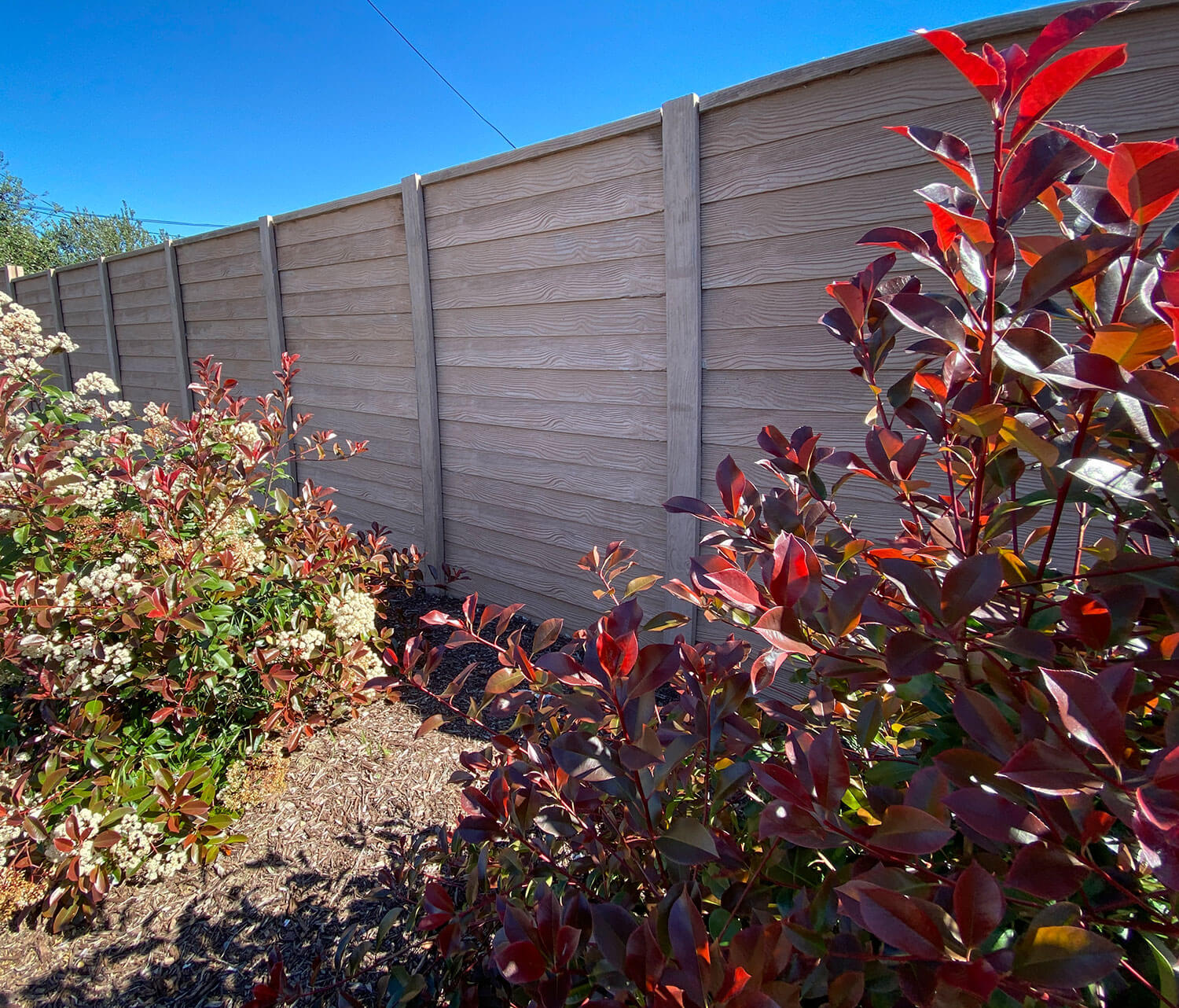
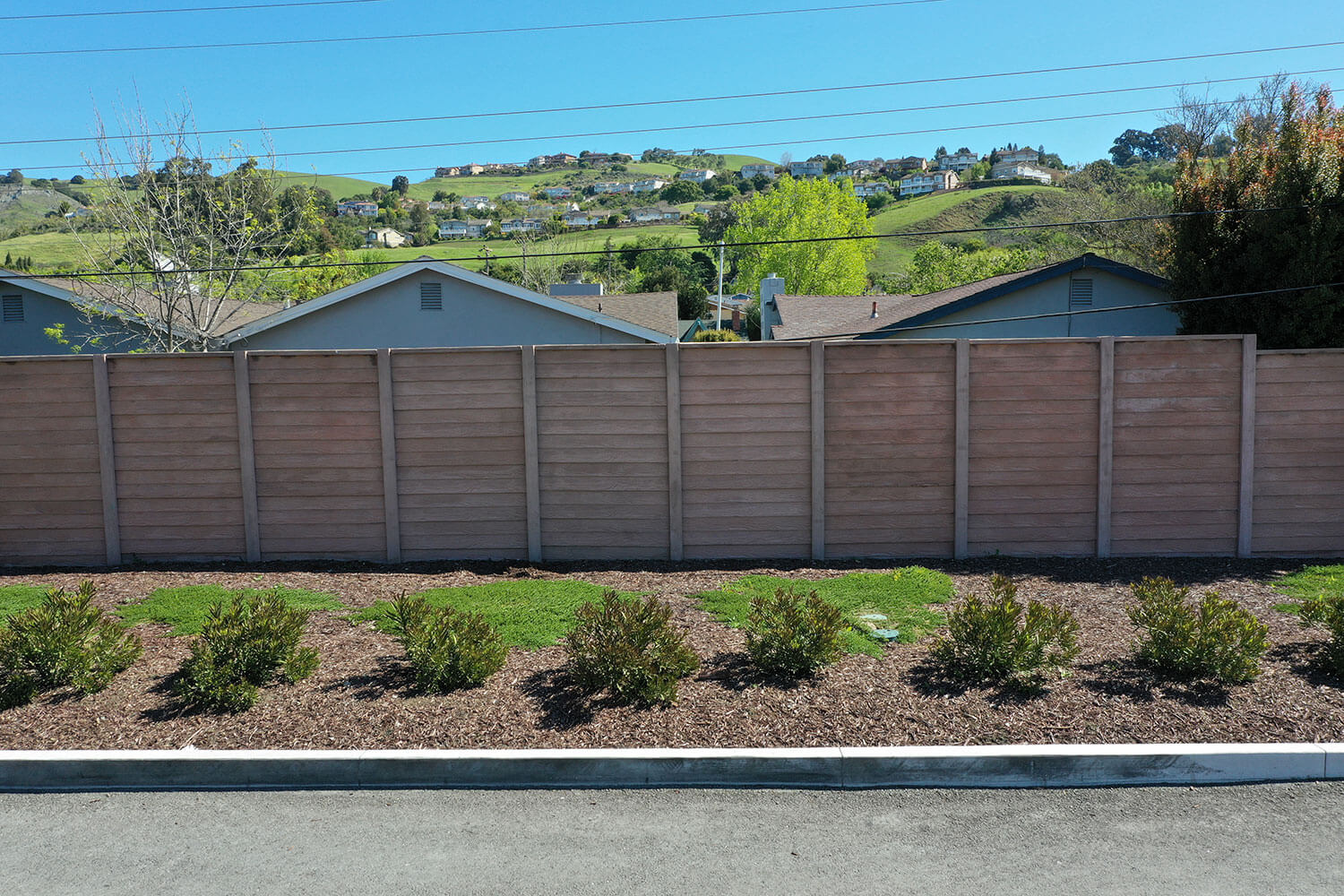
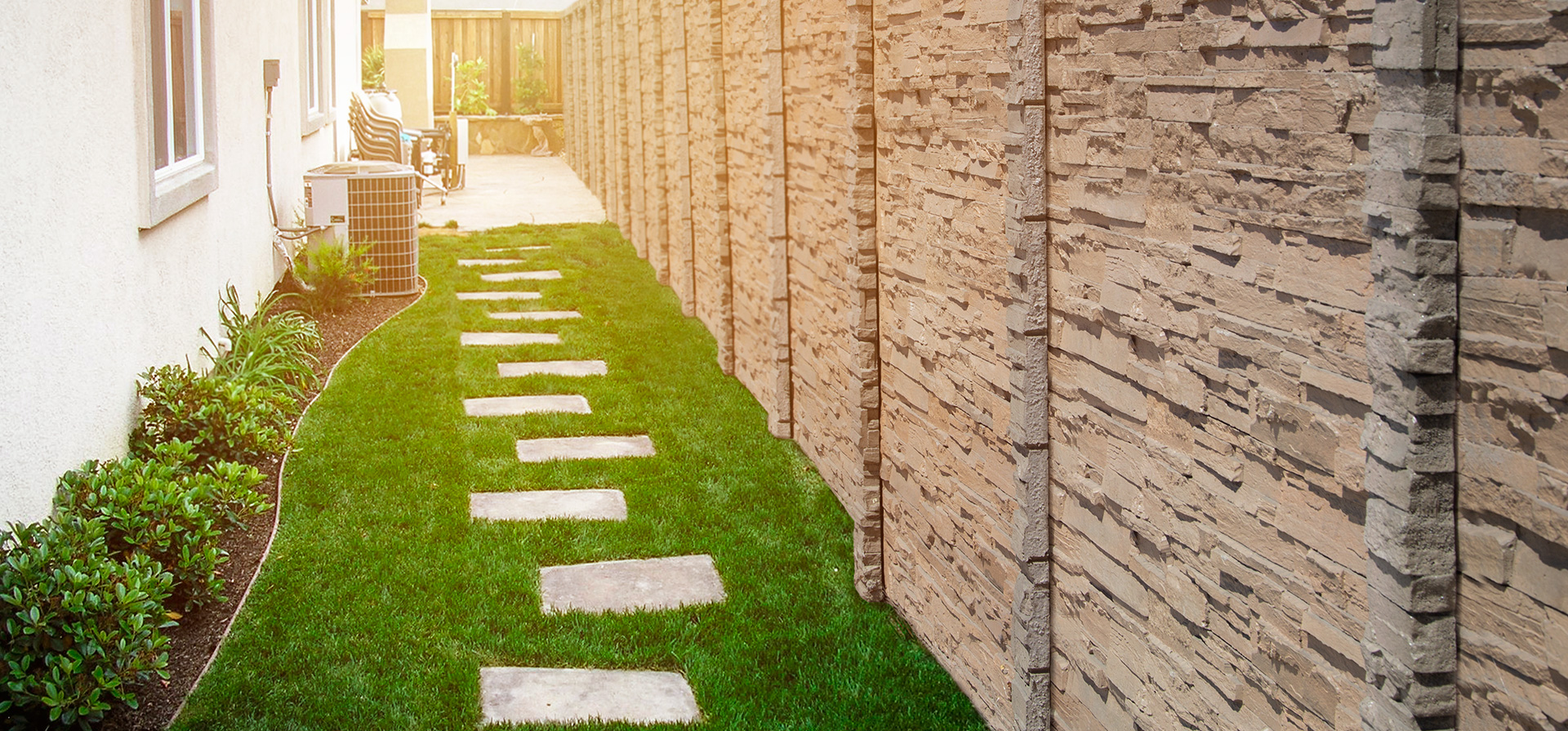
Most California homeowners need a combination of these. Precast concrete addresses all six simultaneously — which is why it's become the dominant choice for California residential fencing. See our full product lineup for options.
Step 2: Check Your HOA Rules
If you live in an HOA community (approximately 25% of California homes do), your CC&Rs likely specify:
- Maximum fence height (typically 6 feet for side/rear, 3-4 feet for front)
- Approved materials (many HOAs now require concrete or masonry)
- Color restrictions (earth tones are most commonly approved)
- Architectural review process (submit plans before installation)
- Setback requirements (distance from property line)
We provide HOA presentation packages including material samples, renderings, and spec sheets. Learn more on our HOA community fence page.
Step 3: Assess Your Wildfire Risk
Check your property's Fire Hazard Severity Zone designation at fire.ca.gov. If you're in a High or Very High zone:
- Non-combustible fencing is strongly recommended (and increasingly required by insurers)
- Wood and vinyl should be avoided within 30 feet of structures
- Your fence material may affect insurance availability and premiums
Even in moderate-risk zones, California's increasing wildfire frequency makes non-combustible fencing a prudent choice. Read our detailed wildfire zone fencing guide.
Step 4: Understand California Fence Laws
Key California fencing regulations:
- Height limits: Most cities allow 6 feet in rear/side yards, 3-4 feet in front yards without a variance
- Permits: Required for fences over 6 feet in most jurisdictions; some cities require permits for any fence
- Property line placement: Fences must be on or inside your property line; shared fences require neighbor agreement
- Good Neighbor Law (CC §841): Adjoining landowners share maintenance responsibility for boundary fences
- Pool fencing: Must be at least 5 feet tall with self-closing, self-latching gates (per California Building Code)
Step 5: Consider Your Climate Zone
California's diverse climate zones affect fence performance differently:
| Region | Key Challenges | Best Materials |
|---|---|---|
| Coastal (LA, SF, San Diego) | Salt air, fog moisture, moderate temps | Concrete, vinyl (no wood — salt accelerates rot) |
| Inland Valley (Riverside, Sacramento) | Extreme heat (100°F+), intense UV | Concrete (vinyl warps/yellows in heat) |
| Desert (Palm Springs, Bakersfield) | Extreme heat, UV, sand abrasion | Concrete only (all others degrade rapidly) |
| Mountain/Foothill (Sierra, San Bernardino) | Wildfire, freeze-thaw, snow load | Concrete (fire-resistant, handles freeze-thaw) |
| Central Valley (Fresno, Stockton) | Extreme heat, agricultural dust, wind | Concrete (handles all conditions) |
Step 6: Compare Materials
Here's how the major fencing materials compare for California conditions:
| Material | Cost/LF | Lifespan | Maintenance | Fire Rating | Sound Reduction |
|---|---|---|---|---|---|
| Precast Concrete | $175-$225 | 50-100+ yrs | None | 4-hour | STC-35, lab-tested |
| CMU Block Wall | $50-$120 | 50-75 yrs | Low | 4-hour | Solid, comparable |
| Wood | $15-$35 | 10-15 yrs | High | None | Poor, gaps leak sound |
| Vinyl | $20-$40 | 20-30 yrs | Low-Med | None (melts) | Poor, hollow |
| Wrought Iron | $30-$60 | 50+ yrs | Medium | Non-combustible | None |
| Chain Link | $10-$25 | 20-30 yrs | Low | Non-combustible | None |
For detailed cost breakdowns, visit our concrete fence cost page.
Step 7: Plan Your Budget
Think in terms of total cost of ownership, not just installation cost:
- Budget option: Chain link ($10-$25/LF) — functional but no privacy, sound, or aesthetic value
- Mid-range: Wood ($15-$35/LF) — familiar look but high maintenance and short lifespan
- Premium value: Precast concrete ($175-$225/LF) — highest upfront but lowest lifetime cost
- Luxury: CMU block wall ($50-$120/LF) — similar performance to precast at higher cost
Financing options are available for precast concrete installations. A $15,000 project at 7.9% APR over 10 years is approximately $180/month — less than the annual maintenance cost of a wood fence.
Step 8: Choose Your Installer
For any fence material, verify:
- California contractor's license (CSLB verification at cslb.ca.gov)
- Active bond and insurance
- Specific experience with your chosen material
- Written warranty (structural and workmanship)
- References from similar projects in your area
- Permit handling included in scope
Fence Installers holds CA License #1057703 with a $25,000 bond. We've completed 10,000+ projects across California since 1979.
Frequently Asked Questions
What is the best fence material for California?
Precast concrete is the best all-around fence material for California. It handles extreme heat, UV, seismic activity, and wildfire risk while providing privacy, sound reduction, and zero maintenance. It's the only material that addresses all of California's unique challenges simultaneously.
How much should I budget for a fence in California?
For a typical 200-linear-foot residential fence in California, budget $35,000-$45,000 for precast concrete, $3,000-$7,000 for wood, or $4,000-$8,000 for vinyl. Remember to factor in lifetime maintenance costs — wood adds $500-$1,500/year in ongoing expenses.
Do I need a permit for a fence in California?
Most California cities require permits for fences over 6 feet tall. Some cities (like Los Angeles) require permits for any fence. Check with your local building department. Professional installers like Fence Installers handle permitting as part of the installation service.
What fence height is allowed in California?
Standard California zoning allows 6 feet in rear and side yards, and 3-4 feet in front yards. Variances for taller fences are available in many jurisdictions, especially for sound barriers or security applications. HOAs may have additional height restrictions.
Ready to choose your fence? Get a free estimate with material recommendations tailored to your property, climate zone, and budget. Call 1.626.416.0919.
Ready to Get Started?
Get a free, no-obligation estimate for your precast concrete fence project. Our team will visit your property, take measurements, and provide a detailed quote within 48 hours.