The California Fencing Decision: Concrete vs. Wood
For California homeowners, choosing between a concrete fence and a wood fence isn't just about aesthetics — it's about fire safety, long-term cost, and whether your investment will still be standing in 20 years. With over 45 years of fence installation experience across California, we've seen thousands of homeowners make this decision. Here's the honest, data-driven comparison.
Upfront Cost: Wood Wins Initially
Let's address the elephant in the room: wood fences are cheaper to install. A standard 6-foot wood privacy fence costs $15-$35 per linear foot installed in California. A precast concrete fence ranges from $175-$225 per linear foot depending on style and height. For a typical 200-linear-foot residential project, that's $3,000-$7,000 for wood versus $35,000-$45,000 for concrete. That gap is real and worth being straight about.
But upfront cost tells less than half the story. The real question is: what will you spend over the life of the fence?
Total Cost of Ownership: Concrete Wins Decisively
Wood fences in California's climate last 10-15 years before requiring full replacement. During that time, you'll spend $500-$1,500 annually on staining, sealing, board replacement, and post repair. Over 30 years, a wood fence costs $25,000-$50,000 in installation and maintenance combined.
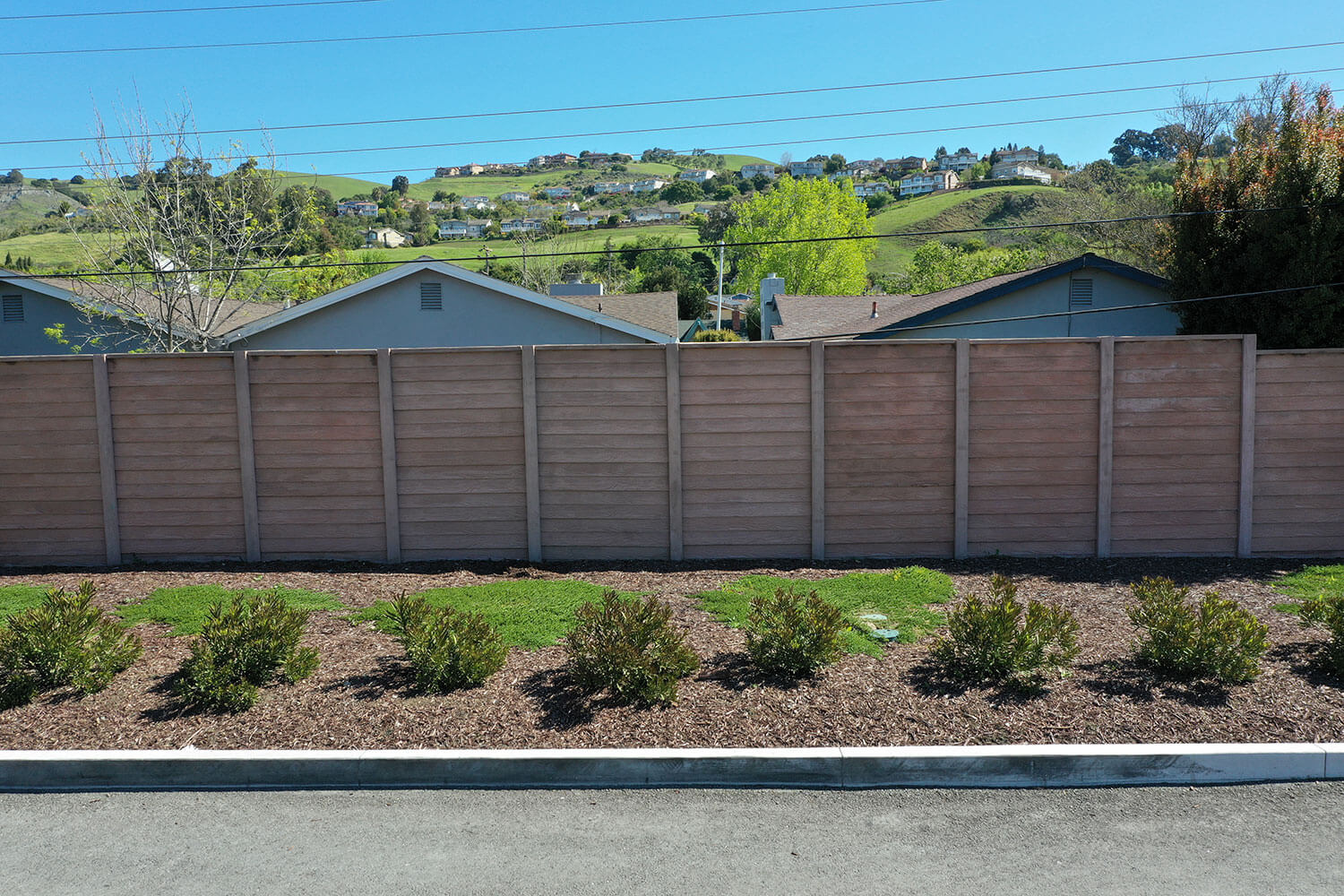
A precast concrete fence lasts decades with zero maintenance. No painting, no staining, no board replacement, no post rot. Your 30-year cost is the same as your day-one installation cost, because there is no second cost: for a typical 200-linear-foot run that is $35,000-$45,000 and then nothing. Wood costs less to put in and keeps asking for money.
For detailed pricing by product type, see our concrete fence cost guide.
Fire Resistance: Critical in California
This is where the comparison becomes a safety issue, not just a financial one. California experiences devastating wildfires annually. Wood fences are combustible — they ignite from flying embers and can carry fire directly to your home's structure. Insurance companies increasingly recognize this risk, and some are requiring non-combustible fencing in wildfire-prone areas.
Precast concrete is completely non-combustible. It carries a 4-hour fire rating and will not ignite, spread flame, or produce toxic smoke. In wildfire zones, a concrete fence acts as a firebreak between your home and approaching flames. CAL FIRE recommends non-combustible fencing within the defensible space zone around structures.
For homeowners in wildfire-prone areas, read our guide on the best fence for California wildfire zones.
Durability and Lifespan
California's climate is tough on wood: intense UV exposure bleaches and cracks boards, dry heat causes warping, and termites are endemic throughout the state. Even pressure-treated wood degrades significantly within 5-7 years without aggressive maintenance.
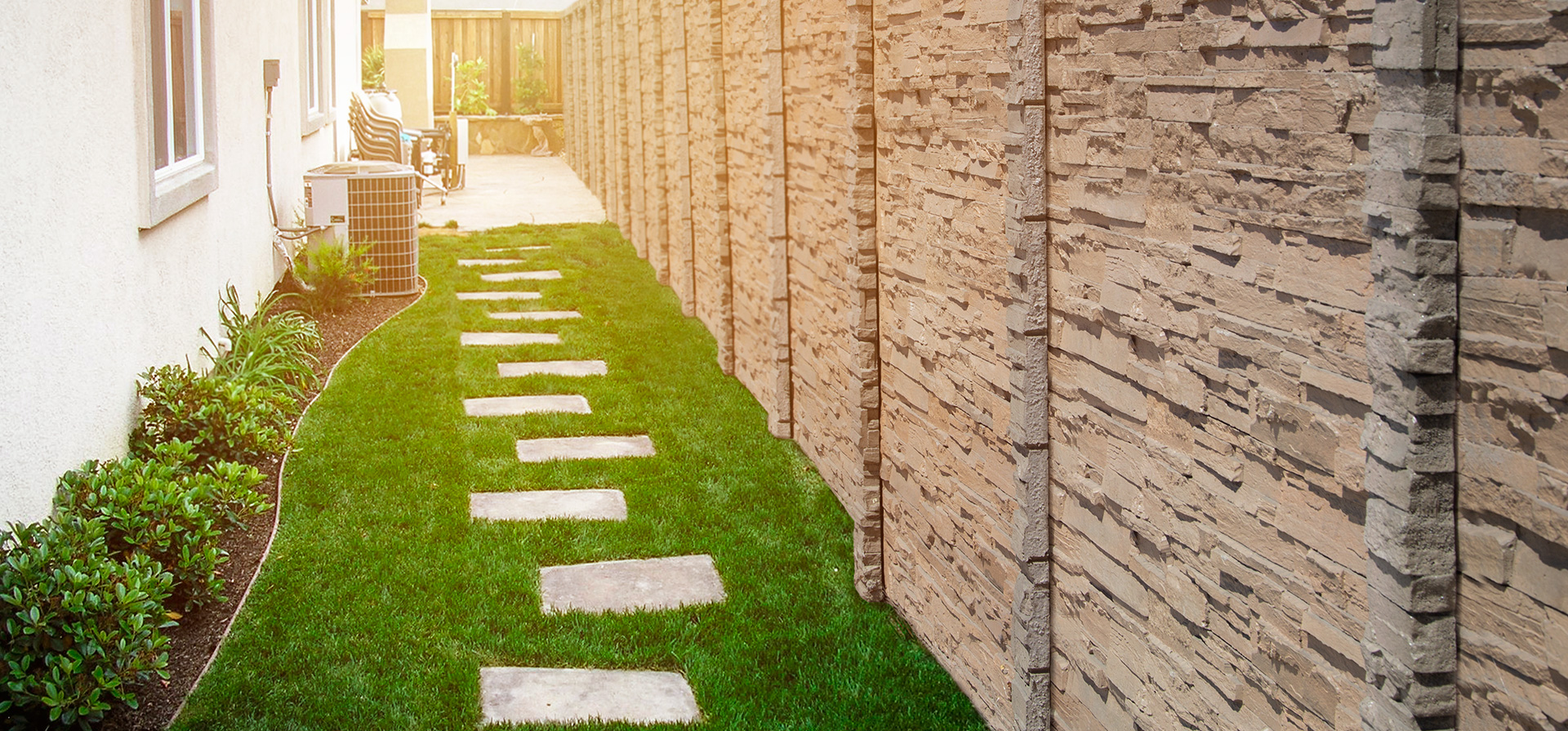
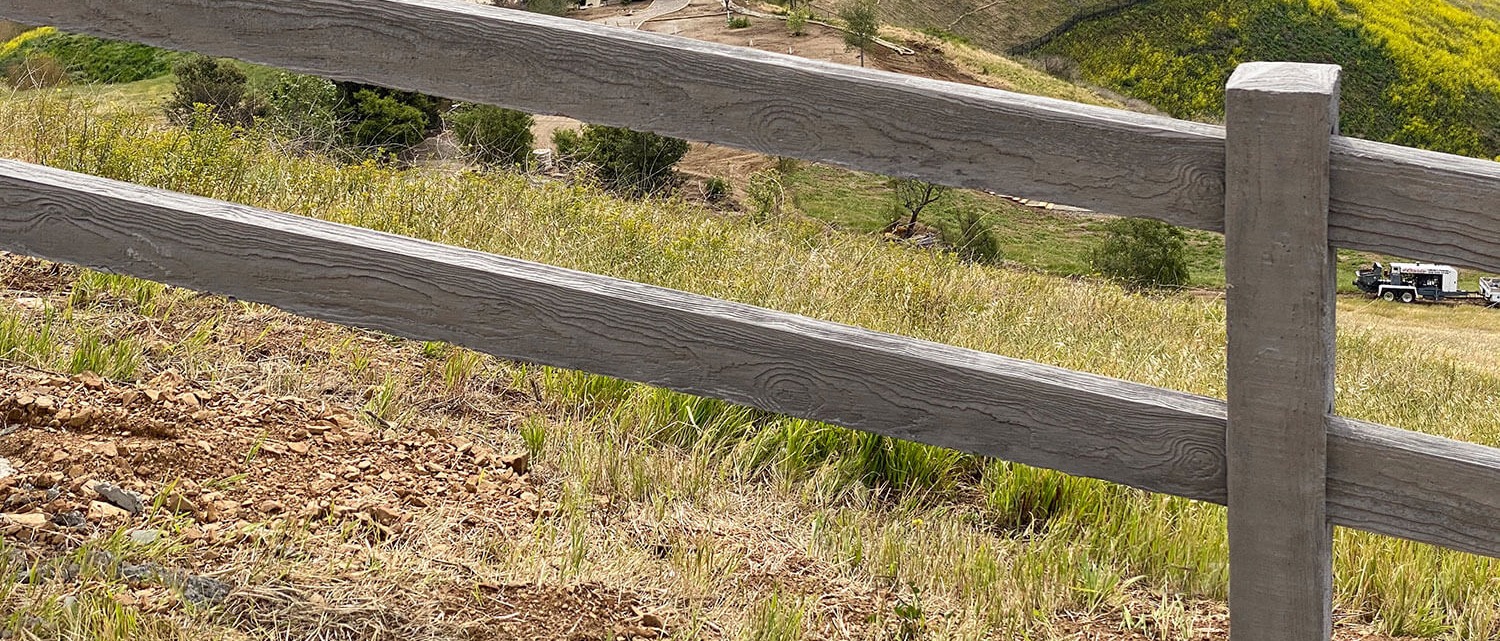
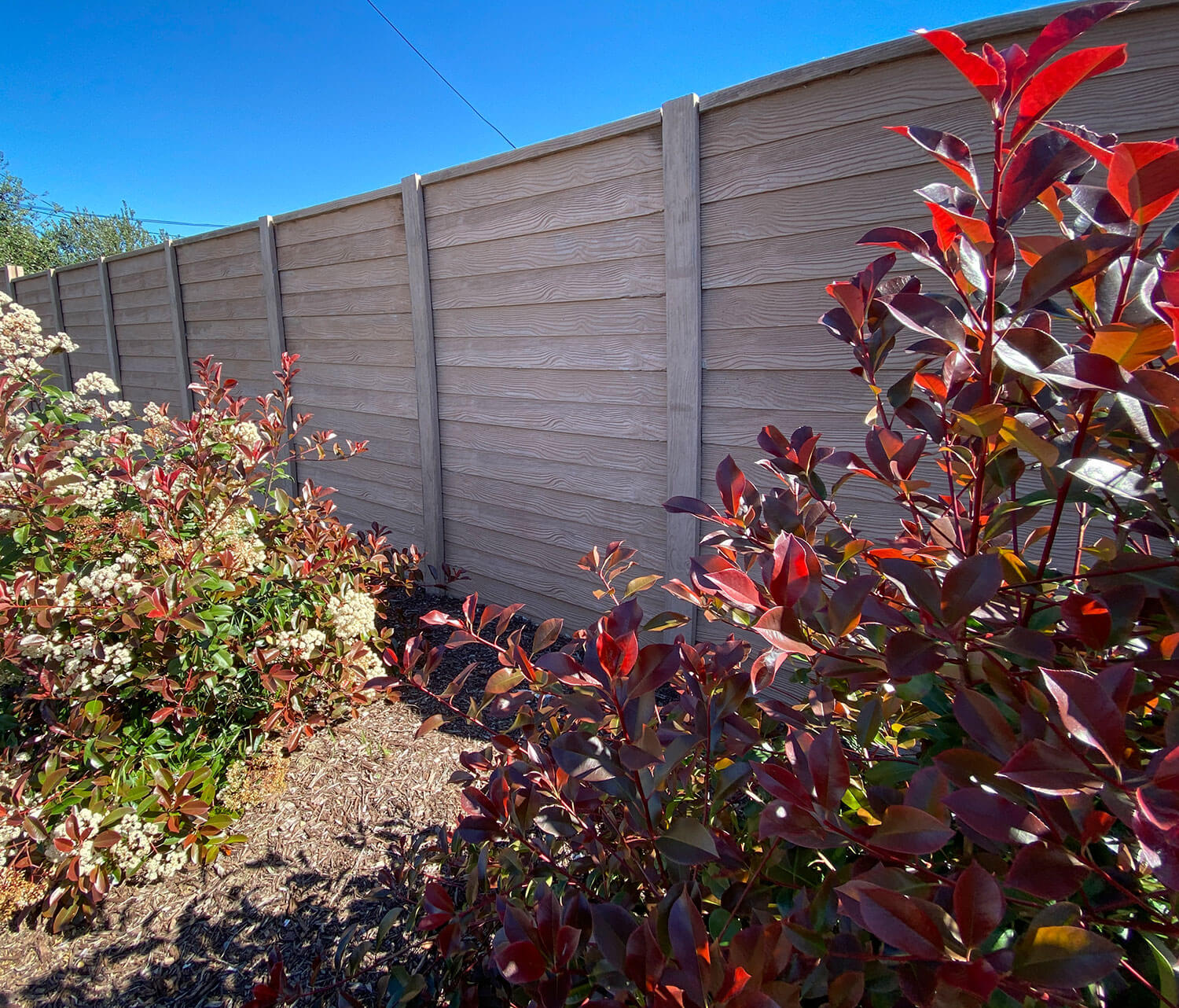
Precast concrete panels are manufactured at 5,000+ PSI strength in controlled factory conditions. They resist UV, moisture, insects, and seismic activity. Our panels installed in the 1980s still look and perform like new — no fading, no cracking, no structural degradation.
Maintenance Requirements
| Task | Wood Fence | Concrete Fence |
|---|---|---|
| Annual staining/sealing | Required ($300-$800) | Not needed |
| Board replacement | 2-5 boards/year ($50-$200) | Not needed |
| Post repair/replacement | Every 8-12 years ($500-$2,000) | Not needed |
| Termite treatment | Annual inspection ($100-$300) | Not applicable |
| Cleaning | Annual power wash ($100-$200) | Optional rinse |
| Full replacement | Every 10-15 years | Never (50-100+ year lifespan) |
Privacy and Sound Reduction
Both materials can provide visual privacy at 6-foot heights. However, concrete offers a significant advantage in sound reduction. A solid precast concrete panel carries a lab-tested STC-35 (ASTM E90) rating; the report is summarized on our specs page. Wood fences, with their gaps, joints, and thinner material, let sound straight through.
For homes near freeways, busy streets, or commercial areas, this difference is dramatic. Learn more about our sound barrier fence solutions.
Property Value Impact
Real estate appraisers consistently value concrete fencing higher than wood. A precast concrete fence is considered a permanent improvement — it adds to your property's structural value and curb appeal. Wood fencing is considered a depreciating asset that loses value from day one.
HOA communities with precast concrete perimeter walls see 5-15% higher property values compared to those with wood fencing. For individual homes, a quality concrete fence can add $5,000-$15,000 in appraised value.
HOA Compliance
California HOAs increasingly specify precast concrete for community fencing due to its uniform appearance, zero maintenance requirements, and permanent nature. If your HOA currently allows wood, check whether they're planning to transition — many are. Precast concrete meets virtually all HOA architectural standards and eliminates the enforcement headaches of deteriorating wood fences.
See our dedicated HOA community fence page for more information.
Environmental Considerations
Wood fences require repeated chemical treatments (stains, sealants, preservatives) that leach into soil over time. They also require replacement every 10-15 years, generating significant landfill waste. A single residential wood fence replacement produces 500-1,000 pounds of waste.
Precast concrete is inert — it doesn't leach chemicals or require treatments. Its 50-100+ year lifespan means one installation replaces 4-7 wood fence lifecycles, dramatically reducing lifetime environmental impact.
Installation Speed
Wood fence installation for a typical residential project takes 2-5 days. Precast concrete installation takes 1-3 days. Our crane-set method allows us to install 100-200 linear feet per day, often completing residential projects faster than wood fence contractors.
Learn about our full installation process.
The Verdict
Wood fences cost less upfront but cost dramatically more over time. For California homeowners — especially those in wildfire zones, HOA communities, or near busy roads — precast concrete is the superior long-term investment. It's safer, stronger, quieter, and ultimately cheaper when you factor in the true cost of ownership.
Frequently Asked Questions
Is a concrete fence worth the extra cost?
It depends what you are optimising for. Precast costs substantially more upfront than wood, several times more per linear foot, and on a 30-year view the two are closer than the sticker prices suggest once you count staining, repairs and at least one full wood replacement. What precast buys you that wood cannot is permanence: it does not rot, warp, burn or need refinishing, and it is still standing when the second wood fence has come and gone. If lowest upfront cost is the goal, wood wins. If you do not want to think about the fence again, concrete does.
How long does a wood fence last in California?
In California's climate, a well-maintained wood fence lasts 10-15 years. Without regular staining and sealing, expect 7-10 years. Termite damage, UV exposure, and dry heat accelerate deterioration significantly compared to cooler, wetter climates.
Can a concrete fence stop a wildfire?
A concrete fence won't stop a wildfire, but it acts as a firebreak that prevents flame spread to your home. Unlike wood fences that ignite from embers and carry fire directly to structures, concrete is completely non-combustible with a 4-hour fire rating.
Does a concrete fence increase home value?
Yes. Precast concrete fencing is considered a permanent improvement by appraisers. Homes with concrete fencing typically see $5,000-$15,000 in added appraised value, while wood fencing depreciates from day one.
Ready to upgrade from wood to concrete? Get a free estimate or call us at 1.626.416.0919.
Ready to Get Started?
Get a free, no-obligation estimate for your precast concrete fence project. Our team will visit your property, take measurements, and provide a detailed quote within 48 hours.