Precast Concrete vs. Block Wall: Same Material, Different Approach
Both precast concrete fences and CMU (Concrete Masonry Unit) block walls are made from concrete. But the manufacturing method, installation process, and final result differ significantly. If you're considering a permanent concrete perimeter for your California property, understanding these differences will save you time, money, and frustration.
What's the Fundamental Difference?
A CMU block wall is built on-site, one block at a time, by masons. Each block is laid by hand, mortared, reinforced with rebar, and filled with grout. It's a labor-intensive, weather-dependent, multi-week process.
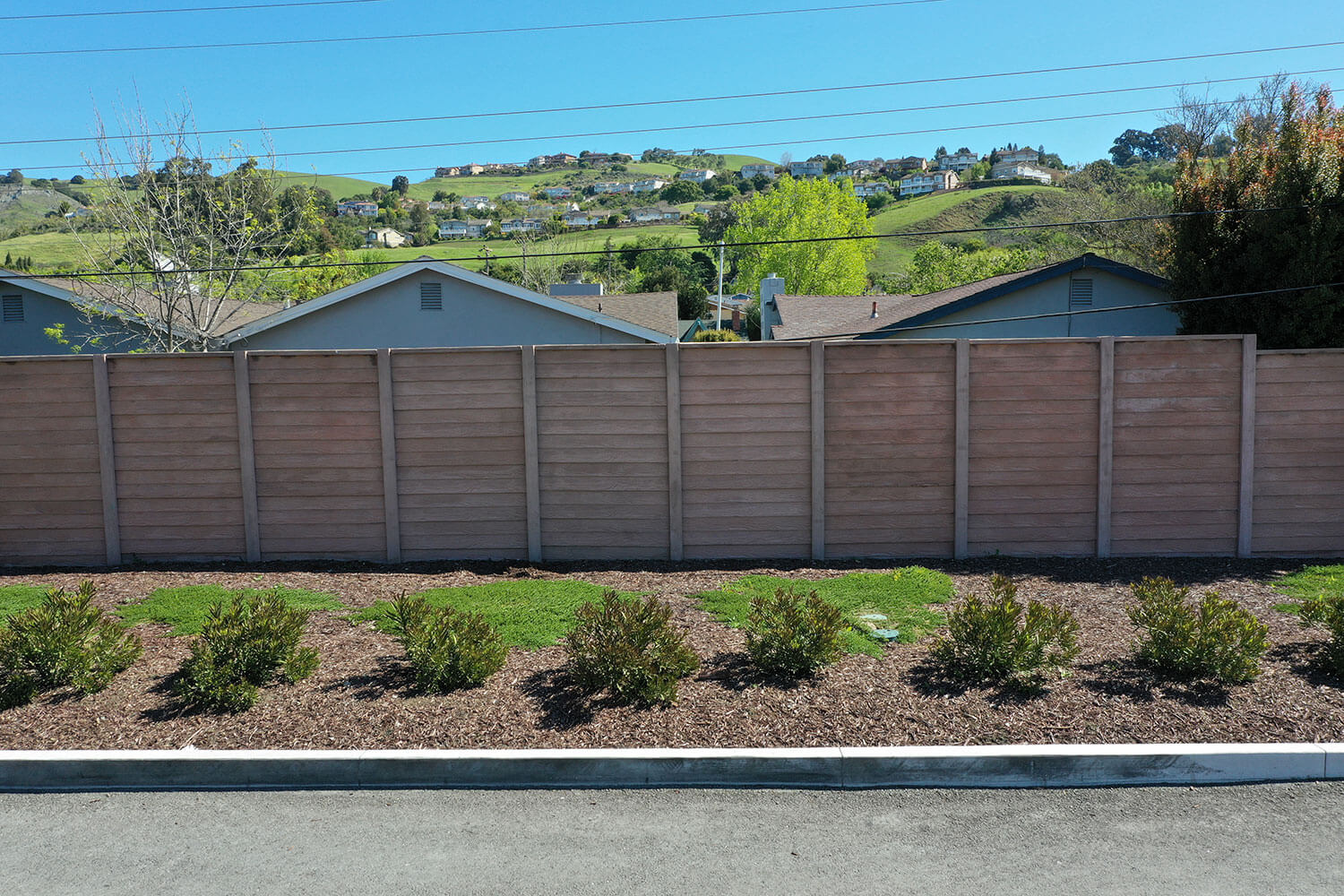
A precast concrete fence uses factory-manufactured panels that are crane-set into steel posts on-site. The panels are cast in controlled conditions, cured to full strength, and delivered ready to install. The on-site work is primarily post installation and panel placement.
Installation Time: The Biggest Difference
| Project Size | Block Wall | Precast Concrete |
|---|---|---|
| 100 linear feet | 2-3 weeks | 1-2 days |
| 200 linear feet | 3-5 weeks | 2-3 days |
| 500 linear feet | 6-10 weeks | 3-5 days |
| 1,000 linear feet | 3-5 months | 1-2 weeks |
For a typical residential project (150-250 LF), a block wall means 3-6 weeks of construction noise, dust, and disruption. A precast concrete fence means 2-3 days. This time difference isn't just about convenience — it's about labor cost, weather risk, and project coordination.
Cost Comparison
Block walls in California cost $50-$120 per linear foot for a standard 6-foot wall, depending on finish, reinforcement, and site conditions. Precast concrete fences cost $175-$225 per linear foot for the same height with designer textures.
The cost advantage of precast comes from:
- Reduced labor: 2-3 days vs. 3-6 weeks of skilled mason labor
- Factory efficiency: Panels are mass-produced in controlled conditions
- No weather delays: Block walls can't be built in rain; precast panels install in any weather
- Fewer inspections: Block walls require multiple inspections during construction
For detailed pricing across all our products, see our concrete fence cost guide.
Quality and Consistency
This is where precast concrete has an inherent structural advantage. Factory manufacturing means:
- Consistent strength: Every panel is cured to 5,000+ PSI under controlled conditions
- Uniform appearance: Panels from the same mold are identical — no variation between sections
- No human error: Factory QC eliminates the mortar inconsistencies, alignment issues, and curing problems common in field-built block walls
- Weather-independent curing: Panels cure in optimal conditions regardless of job-site weather
Block walls depend entirely on mason skill, weather during construction, and field conditions. A block wall built in 100°F heat cures differently than one built at 65°F. Mortar joints are only as good as the mason's consistency that day. These variables create quality inconsistency that doesn't exist with precast.
Structural Performance
Both systems can be engineered for California's seismic requirements. However, precast concrete panels have a structural advantage: they're monolithic (single-piece) rather than assembled from hundreds of individual blocks and mortar joints. In seismic events, mortar joints are the weak point in block walls — they crack, separate, and allow the wall to fail.
Precast panels flex as a unit during seismic activity. The steel post-and-panel system allows controlled movement without structural failure. This is why precast concrete is increasingly specified for seismic zones over traditional block construction.
Aesthetics and Texture Options
Standard block walls offer limited aesthetics: split-face block, slump block, or smooth CMU with stucco finish. Custom textures require expensive form liners or hand-applied finishes that add significant cost.
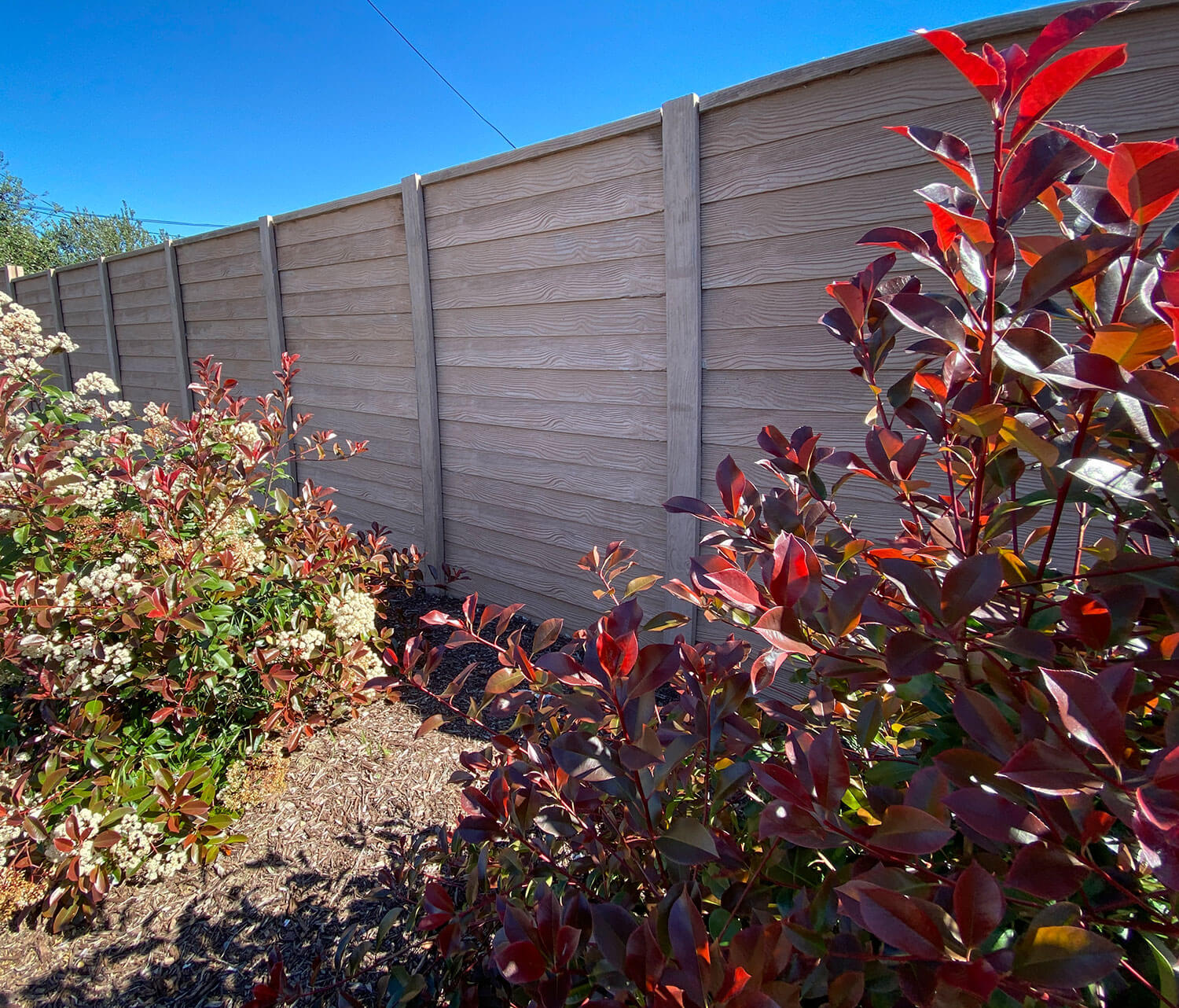
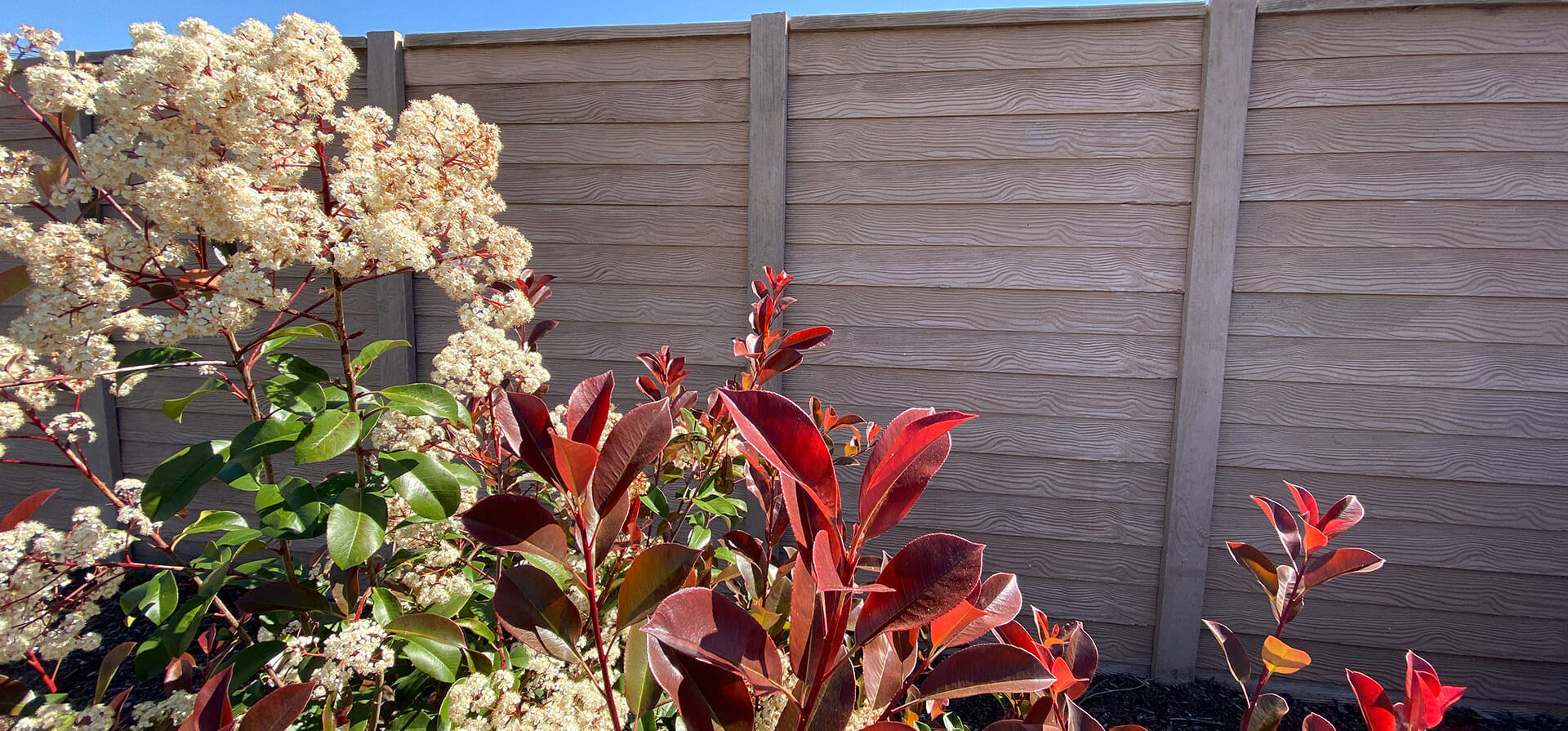
Precast concrete panels are cast from precision molds that replicate natural stone, wood grain, brick, and other textures with photographic accuracy. Our 7 designer textures — ChiselStone, WoodCrete, BlockCrete, StackStone, SmoothStone, RusticBrick, and Rails — provide architectural-grade finishes at standard pricing.
Maintenance Comparison
Block walls require periodic maintenance: mortar joint repair (repointing), crack sealing, and stucco patching if finished. Efflorescence (white mineral deposits) is common and requires chemical treatment. Over 30 years, expect $2,000-$5,000 in block wall maintenance.
Precast concrete panels require zero maintenance. The factory-sealed surface doesn't develop the mortar joint failures, efflorescence, or stucco cracking that plague block walls.
When to Choose Block Wall vs. Precast
Choose a block wall if:
- You need a curved wall (precast panels are straight)
- You're integrating with an existing block structure
- Local codes specifically require CMU construction
- You need a wall taller than 12 feet
Choose precast concrete if:
- You want faster installation (days vs. weeks)
- You want lower cost for equivalent quality
- You want guaranteed consistency across the entire fence line
- You want designer textures without custom pricing
- You want zero long-term maintenance
- You're in a seismic zone and want monolithic panel strength
California Permitting Differences
Both block walls and precast concrete fences require permits for walls over 6 feet in most California jurisdictions. However, the permitting process differs:
- Block walls: Require structural engineering, multiple inspections during construction (footing, rebar, grout, final), and often a separate stucco/finish permit
- Precast concrete: Require engineering approval of the panel system (typically pre-approved by ICC-ES or local equivalents), footing inspection, and final inspection only
The reduced inspection schedule for precast means fewer delays and faster project completion.
The Verdict
For most California residential and commercial fencing projects, precast concrete offers the same (or better) structural performance as block walls at lower cost, faster installation, and with superior aesthetic options. Block walls remain appropriate for specific applications — curved walls, very tall walls, or integration with existing block structures — but precast is the modern standard for straight-line perimeter fencing.
Frequently Asked Questions
Is a precast concrete fence as strong as a block wall?
Yes — often stronger. Precast panels are manufactured at 5,000+ PSI in controlled factory conditions, while block walls depend on field conditions and mason skill. Precast panels are also monolithic (single-piece), eliminating the mortar joint failures common in block walls during seismic events.
How much cheaper is precast than a block wall?
Precast concrete fences typically cost 30-50% less than equivalent block walls. A 6-foot precast fence costs $175-$225/LF installed, while a comparable block wall costs $50-$120/LF. The savings come from reduced labor time (days vs. weeks) and factory manufacturing efficiency.
Can precast concrete look like a block wall?
Yes. Our BlockCrete texture is specifically designed to replicate the appearance of split-face CMU block. From 3 feet away, it's visually indistinguishable from a traditional block wall — but installs in a fraction of the time.
Do precast fences need the same foundation as block walls?
Precast fences use a different foundation system — steel posts set in concrete footings rather than a continuous concrete footing. This requires less excavation, less concrete, and fewer inspections while providing equivalent structural support.
Want to see precast concrete in person? Request a free estimate and we'll bring material samples to your property. Call 1.626.416.0919.
Ready to Get Started?
Get a free, no-obligation estimate for your precast concrete fence project. Our team will visit your property, take measurements, and provide a detailed quote within 48 hours.